
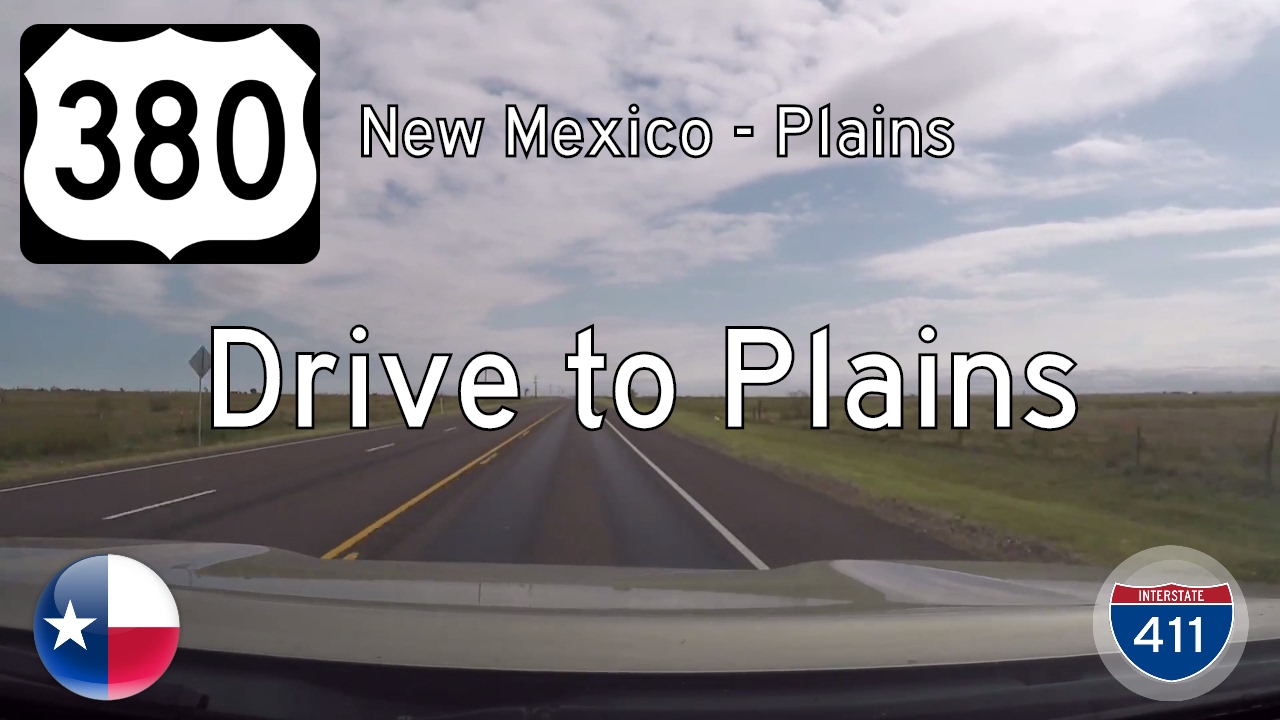
Take a ride through the windswept plains of West Texas as we follow a 44-mile stretch of U.S. Route 380 from Plains to Brownfield. This corridor cuts a wide path across the South Plains, where the land seems to stretch endlessly beneath an open sky, and the rhythm of the road is matched only by the slow turn of irrigation pivots in cotton fields. Though the route may seem quiet at first glance, it carries with it the pulse of rural Texas — steady, dependable, and grounded in the land.
Our journey begins in the small town of Plains, the county seat of Yoakum County. Perched at over 3,500 feet in elevation, this high plain is true to its name — flat, expansive, and dominated by agriculture. Plains itself is a compact, close-knit town with a proud ranching and oil heritage, marked by a scattering of grain elevators and the occasional windmill silhouetted against the sky. As we head east on US-380, the highway quickly clears the town and opens into a wide corridor flanked by farmland as far as the eye can see. The shoulders are broad, and the traffic light, making for a peaceful and undistracted drive.
Leaving Yoakum County behind, the road glides into Terry County, and the transition is marked more by subtle changes in land use than by signage. Here, cotton reigns supreme — the South Plains region is one of the largest cotton-producing areas in the world. During harvest season, bales of the crop line the road like giant spools of thread, waiting for transport to distant gins and textile mills. Depending on the time of year, fields may be vibrant green with young growth, dusty brown and dry, or dotted with the soft white blooms of cotton ready to be picked. The landscape may be spare, but it carries an austere beauty and a deep connection to the rhythms of work and weather.
About halfway through the drive, you’ll pass through the unincorporated community of Tokio — little more than a bend in the road with a few aging buildings that speak to the rise and fall of rural waypoints in Texas history. At one point, communities like this served as rest stops for farmers, travelers, and oilfield workers alike. Now, they whisper of a time when the automobile opened up these prairies to migration and movement. Further along, the land seems to subtly undulate, revealing low draws and caliche ridges that break up the otherwise level terrain.
As we approach Brownfield, the agricultural themes of the route deepen. This town, larger and more developed than Plains, is still very much rooted in the soil. Brownfield is the heart of Terry County and home to one of the region’s key agricultural markets. Vineyards now join cotton and peanuts in the landscape, and the town is increasingly known for its role in the Texas High Plains wine industry. On the edge of town, US-380 meets US-62 and US-82 in a complex tangle of junctions and business routes, welcoming travelers into a broader network of regional connectivity. The terrain, though still mostly flat, begins to show signs of commercial activity and small-town bustle as we near the city center.
Our journey ends at the intersection with Cedar Street in Brownfield, where US-380 continues eastward toward Tahoka and eventually Post. The South Plains may lack the dramatic landscapes of other regions, but this route offers a different kind of richness — one steeped in the slow churn of the seasons, the resilience of farming communities, and the long, patient lines of the horizon. It’s a place where the road becomes more than just pavement — it becomes a thread connecting the people and land of West Texas.
🎵 Music:
Texas Techno by Audionautix is licensed under a Creative Commons Attribution license (https://creativecommons.org/licenses/by/4.0/)
Artist: http://audionautix.com/
🗺️ Route Map
0 Comments