
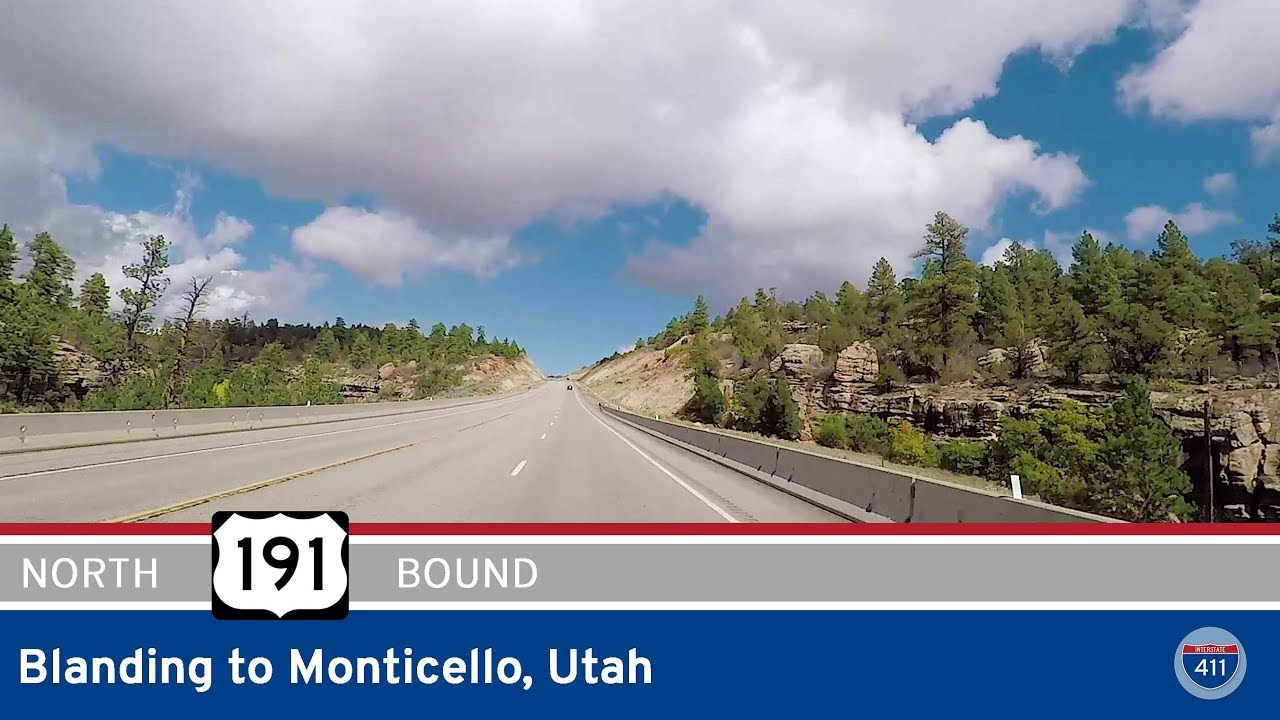
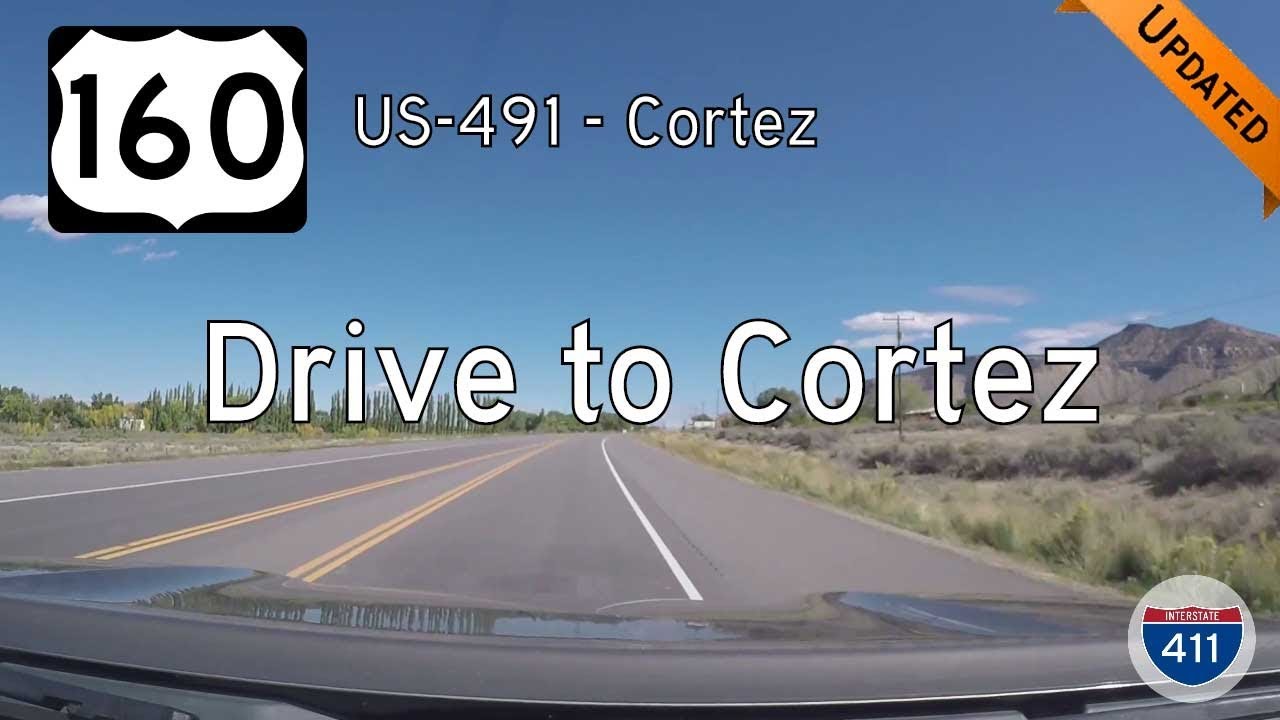
Take a wide-open ride across Utah’s canyon country as we follow U.S. Route 491 for 17 miles from Monticello to the Colorado border. This remote but essential corridor cuts through sage-dotted plateaus and red rock vistas, bridging southeastern Utah with the Four Corners region and carrying travelers into the heart of the high desert. Once known as the infamous Route 666, this stretch of highway has shed its old moniker but not its mystique, offering a serene drive through some of the Southwest’s most dramatic and storied terrain.
We begin our journey at the junction of US-191 and US-491 on the south end of Monticello, a quiet town nestled at the base of the Abajo Mountains. Monticello serves as the administrative center of San Juan County, though its modest footprint and frontier spirit make it feel far removed from the bustle of larger towns. The highway opens up almost immediately after the turn, taking us eastward through a gently rising plain scattered with juniper and piñon pine. Behind us, the dark blue ridges of the Abajos loom large, casting long shadows as we gradually descend away from the high country.
Within just a few miles, the road curves slightly southeast, and the landscape begins to stretch wider, drier, and more desolate. Here, US-491 becomes a true testament to the American Southwest’s expansive beauty—a ribbon of blacktop cutting through golden grasses and weathered red soil, with distant buttes and mesas forming the backdrop. This is classic canyonland country, though the famed tourist trails of Moab and Monument Valley lie far to the north and west. Traffic is sparse, save for the occasional long-haul truck or pickup with a camper in tow, reminding us that this route still connects communities that rely on each other across great distances.
As we near the state line, the road subtly rises and falls with the earth’s undulations, and signs of civilization grow even scarcer. The views here are panoramic—vast swaths of desert unfold to the horizon, with the Sleeping Ute Mountain beginning to rise in the distance, signaling our approach to Colorado. The transition across state lines is quiet and almost imperceptible aside from the iconic welcome sign. There are no towns, no gas stations—just an open road and a sense of movement across an invisible boundary. We end our video just past the border, the sun casting a warm glow as US-491 carries us on toward Cortez and the high mesas of southwestern Colorado.
This short drive is less about landmarks and more about the experience of space—of rolling across lands where history runs deep, yet solitude reigns supreme. It’s a route that reminds us how vast and varied the American West really is, even between towns most maps barely mark.
🗺️ Route Map
0 Comments